




How Document Scanning at Check-in Speeds Up Front Desk Operations
Manual data entry at check-in wastes time and causes errors. Find out how document scanning speeds up your front desk and improves guest experience.
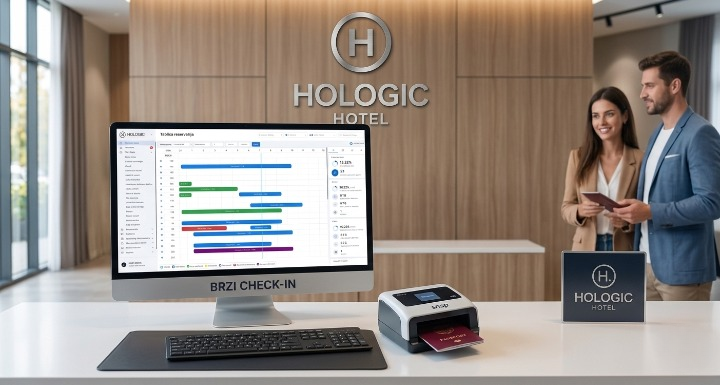
The front desk is the first thing a guest sees. If they're waiting there - it's already a bad start.
Manual data entry from an ID or passport is one of the biggest causes of check-in delays, especially during peak hours. Staff type, guests wait, mistakes happen - and by the end of the day, inaccurate data creates problems with tourist tax registration or invoicing.
That’s why check-in automation is becoming the standard in modern hotels.
Document scanning eliminates that problem entirely.
How It Works
The guest hands over their document, the receptionist places it on the scanner - and within two seconds, all data (name, surname, date of birth, document number, nationality) is automatically filled into the system. No typing. No waiting. No errors.
Hologic PMS integrates document scanning directly into the check-in flow, without additional steps or external tools: data is immediately linked to the guest profile, recorded for registration purposes, and available for all future visits.
How Much Time Is Actually Saved
Manual entry for one guest takes an average of 60 to 90 seconds. Scanning reduces that to 5 to 10 seconds.
For a hotel with 50 check-ins per day, that means:
Manual entry: ~60 minutes lost every day
Scanning: ~5 minutes
That’s nearly an hour per day your staff can spend with guests - not behind a screen.
Fewer Errors, Fewer Problems
A misspelled surname or wrong document number is a small thing that can cause serious complications - from incorrect tourist registration to billing disputes.
By automatically pulling data from the document, errors become nearly impossible. The system reads the document - not the receptionist - and it reads it accurately every time.
A Guest Profile That Grows With Every Stay
Every time a returning guest arrives, the system recognizes them. No need to scan again if the profile already exists - just confirm identity. Over time, the profile builds up with preferences, notes, and stay history.
That's the foundation of personalized hospitality - and it starts with the first scan.
Conclusion
Document scanning isn't a technological luxury - it's an operational standard for any hotel that values its time and reputation.
Hotels that automate check-in don’t do it for the technology - they do it for efficiency, reliability, and better guest experience.
More articles

