




Smart rooms: 3 modes that save energy and money
Smart rooms use ECO, PRECOMFORT and COMFORT modes to reduce energy costs and improve the guest experience — without adding extra workload for staff.
Most hotels make the same mistake.
They heat and cool rooms the same way - regardless of whether a guest is in the room or not.
The result? Costs go up, and the guest experience becomes a matter of luck.
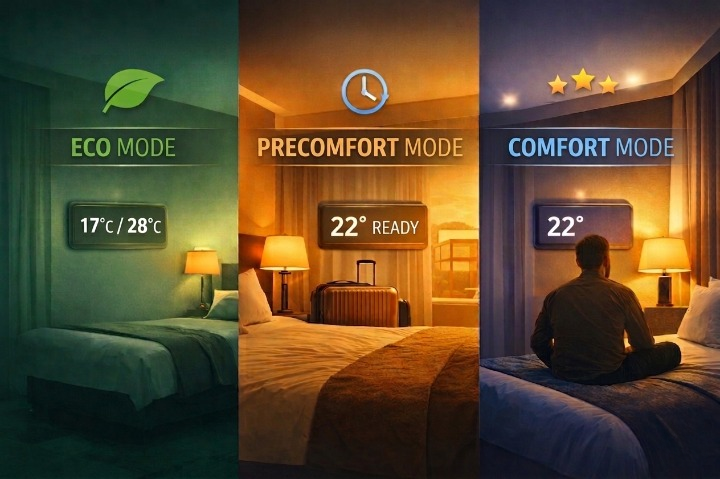
Hologic smart rooms solve this simply - with three clearly defined modes based on the actual room status.
Three modes, three real moments
-> ECO mode - when the room shouldn’t consume energy
The room is empty. The system recognizes this and automatically:
reduces heating or cooling
turns off the lights
switches devices to energy-saving mode
You’re not paying for energy in a space no one is using.
-> PRECOMFORT mode - the room is ready before arrival
This is where guests feel the difference immediately. Before the guest even enters the room:
the temperature is already comfortable
the space feels “alive”
everything is ready
No walking into a cold or overheated room. No waiting for the HVAC to catch up. The first impression is instantly right.
-> COMFORT mode - when the guest is inside
The guest is in the room and everything works as expected:
temperature is stable
lighting is set
no manual adjustments needed
The room works quietly in the background - without the guest thinking about it.
How much empty rooms are really costing you
Hotels typically spend between 60 and 240 kWh per room annually just on climate control. A large portion of that goes to empty rooms. Not because it has to - but because the system doesn’t recognize room status. With automatic ECO mode:
energy savings range from 15% to 30%
no additional staff effort required
no impact on guest comfort
For a 50-room hotel, that means thousands of euros saved every year.
The guest experience starts before entry
Most hotels react only when the guest enters the room. But by then, the first impression is already lost.
PRECOMFORT changes that:
the guest walks into a ready room
no waiting
no discomfort
This isn’t luxury. It’s becoming the expected standard.
Operations that finally make sense
When the system knows the room status:
no guessing
no unnecessary actions
no wasted time
Your staff works with real information - not assumptions.
Conclusion
Three modes. One system. Clear logic.
ECO when the room is empty
PRECOMFORT before arrival
COMFORT when the guest is inside
Hologic smart rooms are not just about saving energy. They solve three key problems:
unnecessary costs
poor first impressions
operational inefficiencies
Every room in your hotel can work smarter - and stop generating unnecessary costs.
More articles

